


What an AI support agent should handle (and what it shouldn't)
An AI agent can take a big share of your support load, but only if you decide up front what it owns and when a person steps in. Here is how to draw that line.
By Admin
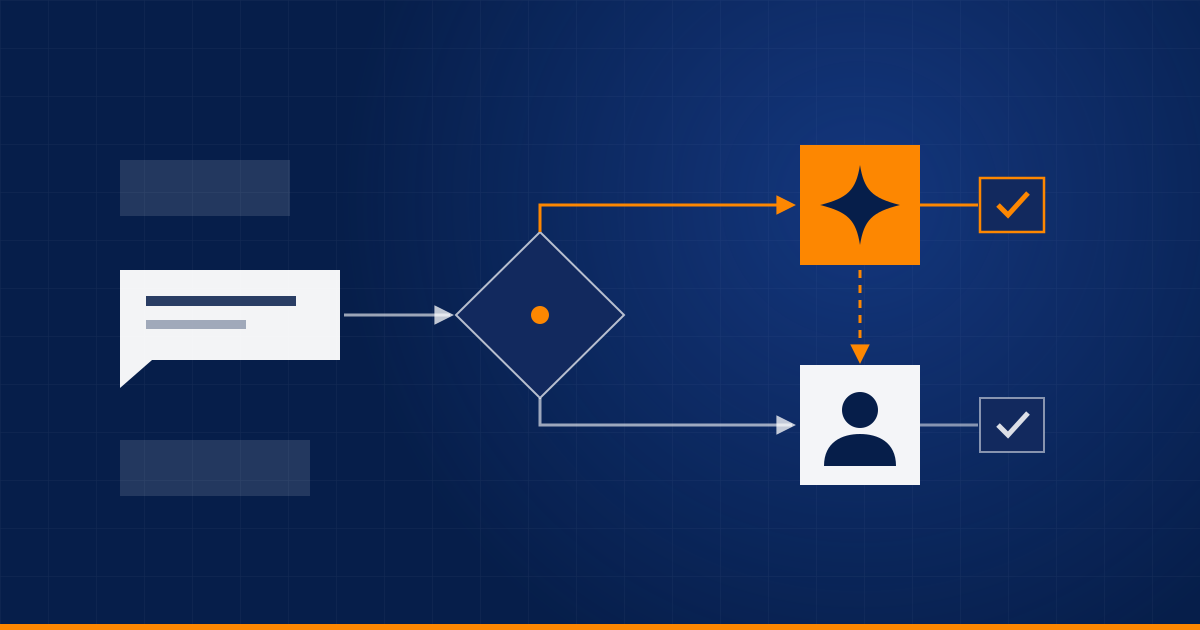
The demo of an AI support agent is always impressive. It answers a question in a friendly tone, in any language, in two seconds. The difficult part comes later, when it meets your real customers, with your real policies, on a bad day.
The teams that get good results do not ask "can the AI handle support?" They ask "which parts of support should it own, and which should it never touch?"
Start from your tickets, not from the model
Before you choose any technology, export your last few hundred conversations and sort them into types: where is my order, how do I reset this, what does this cost, I want a refund, this is broken. In most businesses a handful of types make up most of the volume. Those repetitive types are your candidates. The long tail of unusual cases is not.
Good candidates for an AI agent
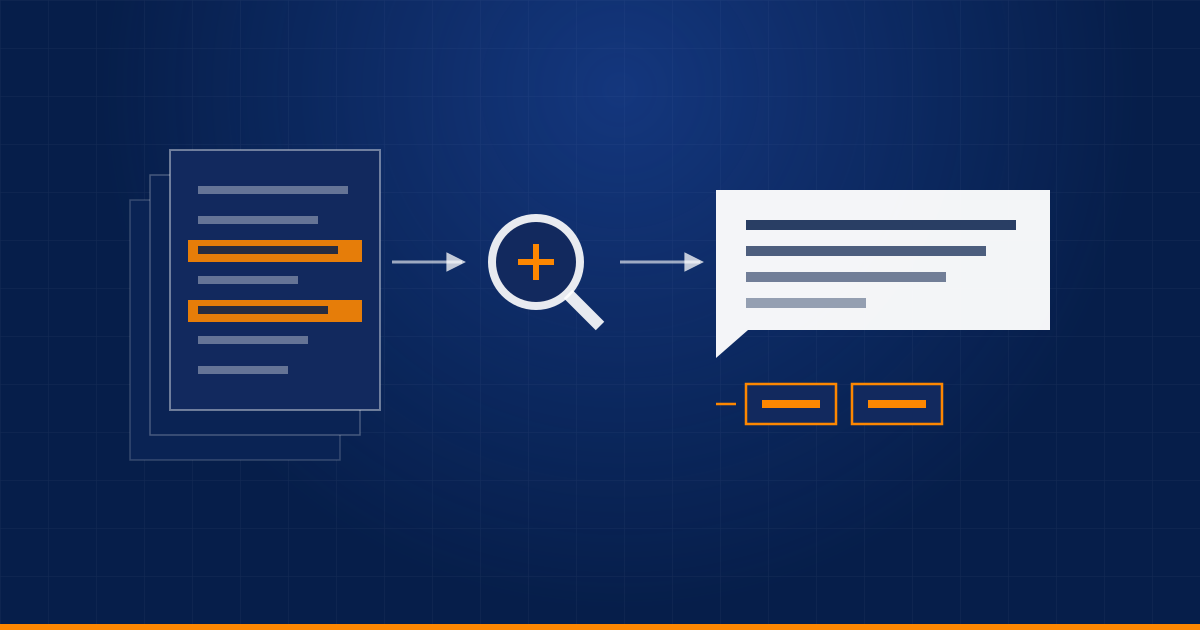
- Repeat questions answered in your documents: shipping times, return policy, pricing, opening hours, how a feature works.
- Status lookups: order, appointment or ticket status, as long as the agent can read them from your system instead of guessing.
- Triage and routing: working out what the customer needs and sending it to the right team with the details already collected.
- Collecting information before a handoff: order number, photos, a description of the problem, so the human starts with everything they need.
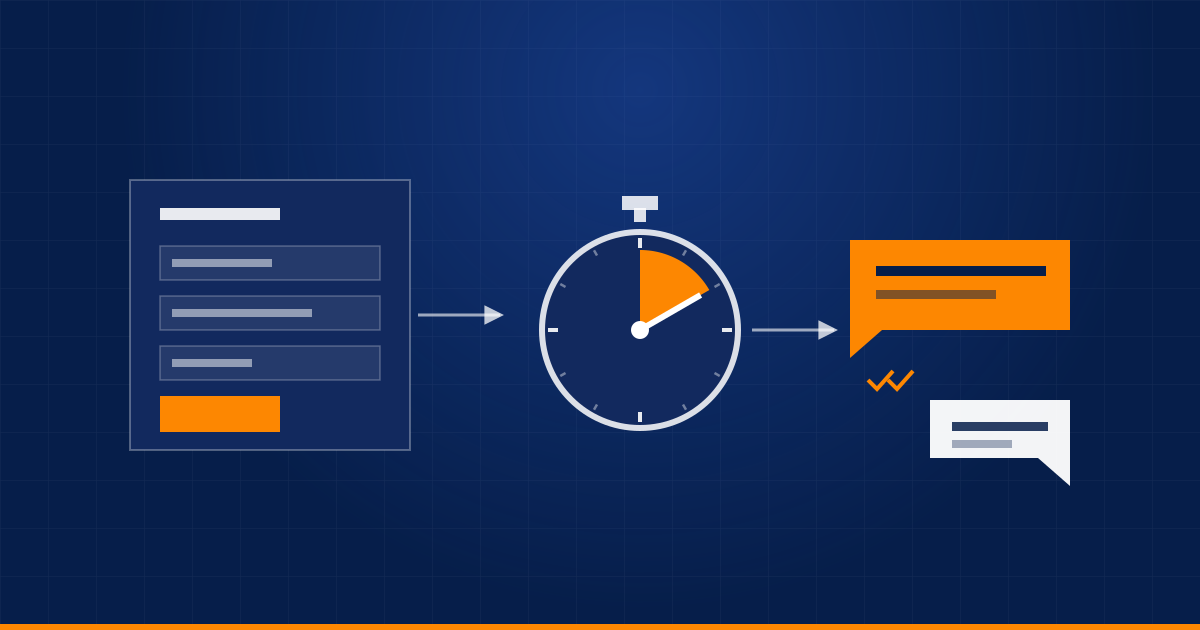
- Out-of-hours cover: acknowledging the message, answering what it can, and booking a callback for the rest.
Keep these with people
- Money decisions beyond written policy: refund exceptions, discounts, compensation.
- Upset or vulnerable customers. Someone who is angry, worried or in distress needs a human, quickly.
- Legal, medical and financial advice, and anything else where a confident wrong answer can harm someone.
- Cases that need judgement or an apology.
- Anything where being wrong costs more than the time saved.
Guardrails that actually matter
Ground every answer in approved sources. The agent should answer from your documents and systems, and say so when it cannot find the answer. "I am not sure, let me get someone" is a good response. A fluent guess is a bad one.
Give its tools narrow permissions. Read-only by default. If it can change something, such as cancelling an order, require an explicit confirmation step and a clear limit.
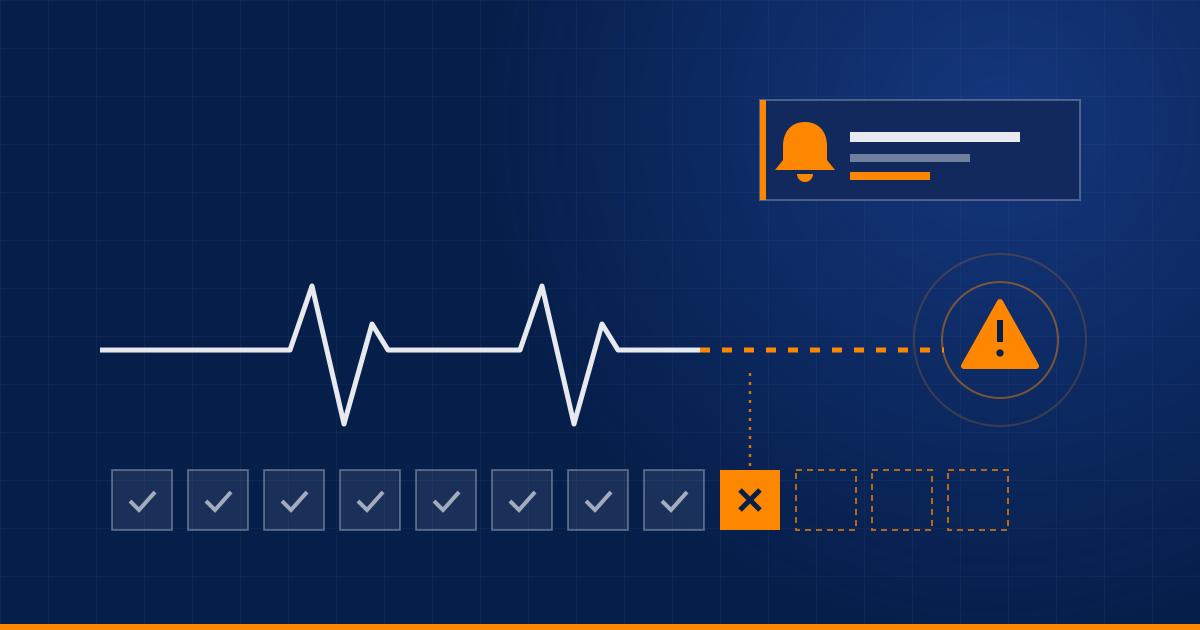
Define handoff triggers in advance. Hand over when the customer asks for a person, when the agent has failed to help twice, when the message mentions words like refund, legal or cancel, or when the customer sounds frustrated. Do not leave it to the model to decide it is out of its depth.
Hand over with context. Pass a short summary and the collected details to the human, so the customer never has to repeat themselves. Never let the agent pretend to be a person.
Test before customers see it
Build a test set from real tickets, fifty to a hundred, with the answer a good agent would give. Run it every time you change the prompt, the documents or the model. Look closely for confidently wrong answers, not only for the ones it missed. A miss costs you a handoff. A confident wrong answer costs you trust.
Roll it out in stages
- Shadow mode. The agent drafts replies that only your team sees. Compare them with what people actually sent.
- Assisted. The agent drafts, a person approves with one click.
- Autonomous on narrow topics. Let it answer alone on the categories where it has proved reliable.
- Expand slowly, one category at a time, only when the numbers support it.
Measure more than "deflection"
The share of chats resolved without a human is easy to measure and easy to abuse, because an agent that stonewalls customers scores well. Track it alongside customer satisfaction, how often customers come back about the same problem, and how many conversations end in a handoff. Read a sample of real conversations every week.
You will also notice something useful: when the agent gets an answer wrong, the cause is often that your documentation was outdated or unclear. Fixing it helps your human team as well.
Want to see which of your tickets an agent could take? Send us a sample and we will tell you honestly.
Related service: WhatsApp & AI Bots
Have a process eating your team's time?
Tell us about it and we'll say honestly whether automation is the right fix.
Book a discovery call